
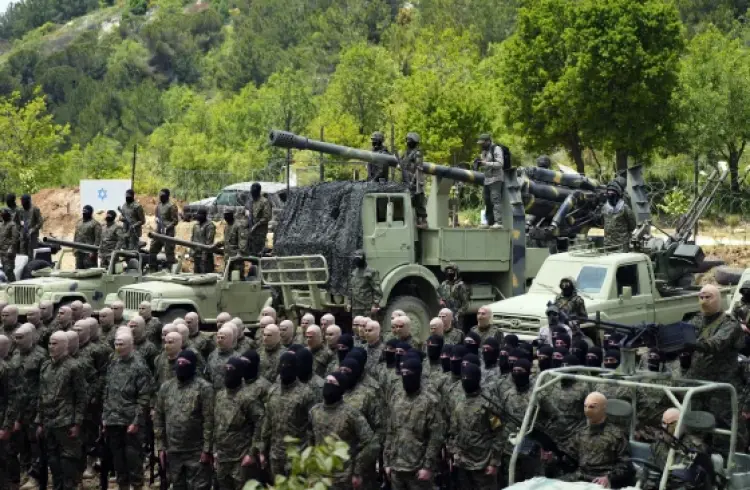
A growing body of indicators and evidence suggests that Israel’s far-right nationalist government—led in particular by Benjamin Netanyahu—is determined to initiate a new war against Iran, Hezbollah, or both, with the possibility of launching intensive airstrikes in parallel against the Houthis.
This is expected to take place during the period extending from the first month of the new year, 2026, until the coming summer—that is, during the first half of the year. This timeframe precedes Israel’s next elections, which are scheduled for October 2026, or possibly several months earlier should the elections be brought forward. This assessment is based on the following considerations:
First: Netanyahu’s insistence on maintaining a state of war and sustaining its pressure on Israeli society, having concluded that a return to the genocidal war on Gaza in its previous form has become difficult and increasingly unrealistic.
Second: The state of war serves as a critical tool for Netanyahu and his coalition partners to deflect attention from mounting domestic crises—most notably the growing pressure to establish an official commission of inquiry into the events of October 7, as well as Netanyahu’s ongoing weekly court appearances to testify in multiple corruption cases.
Third: Achieving a decisive “historic accomplishment”—whether by fully neutralizing Hezbollah, changing the regime in Iran, or dismantling its nuclear program while weakening its ballistic missile capabilities—would provide powerful electoral capital ahead of the next elections, securing Netanyahu another four-year term in office.
Netanyahu views the survival of his governing coalition and victory in the upcoming elections as an existential personal matter—one that affects not only his political future but also his personal fate. The serious corruption charges against him, combined with what is widely described as the “October 7 catastrophe,” could ultimately lead to imprisonment and consign him to history through its harshest and most ignominious chapters.
Accordingly, Netanyahu is likely to seek—during his (potentially historic) meeting with U.S. President Donald Trump—a “secret” green light to launch an attack on Iran, Lebanon, or both, or at the very least to reach an understanding on initiating preparations and operational planning for a future war when the appropriate moment arises in the coming year.
Assessments indicate that the Israeli military may prefer to begin the war by first targeting Lebanon, while simultaneously delivering large-scale and destructive strikes against the Houthis in Yemen. This is based on the assumption that the Houthis would not remain silent should war resume against Hezbollah. Such a strategy would aim to neutralize what remains of Hezbollah’s missile capabilities and curb Houthi capacities, before subsequently turning toward Iran with Israel’s northern front fully secured.
This scenario may currently appear the most plausible given existing indicators. However, it is not inevitable. The Israeli strategy rests on assumptions that may prove inaccurate, and if war were to erupt, no one can reliably predict its trajectory or outcomes—particularly as the Israeli military would, this time, lack the element of surprise.


